

Is your marriage at a crossroads? You might wonder if legal separation or divorce is right for you. Knowing the differences between these two options can help protect your interests.
Legal separation is a choice that lets couples live apart but stay married. It’s different from divorce, which ends the marriage. Legal separation is a flexible way to handle relationship problems.
When looking at legal separation vs divorce, couples find many ways to tackle marriage issues. The pros and cons of each option affect finances and personal freedom.
Key Takeaways
- Legal separation allows couples to remain married while living separately
- Divorce permanently ends the marital relationship
- Both options involve legal proceedings and possible asset division
- Legal separation can keep some financial and insurance benefits
- Couples can use legal separation as a step towards divorce
Understanding Legal Separation
Legal separation is a big legal choice for couples facing problems. It’s not just about living apart. It’s a formal way to handle relationship issues while keeping some legal ties.
In California, Family Courts see legal separation as a real option. It lets couples live apart but stay legally married. They make a detailed agreement that covers their rights and duties.
Definition of Legal Separation
Legal separation means couples live apart with court help. They don’t end their marriage. The process includes making agreements on:
- Property division
- Financial duties
- Child care plans
- Support for each other
Legal Separation Process
To file for legal separation, couples must follow certain steps. These steps are set by laws on marriage separation. The main steps are:
- File a petition with the court
- Give legal papers to the spouse
- Talk about what to agree on
- Get the court to approve the deal
Reasons for Legal Separation
Couples pick legal separation for many reasons. Some reasons include:
- Keeping financial benefits like shared health insurance
- Beliefs that stop them from getting a divorce
- Wanting to try to get back together
- Planning finances carefully
Legal separation is a flexible choice instead of divorce. It lets couples check if they can work things out. They also set clear rules and expectations.
Understanding Divorce
Divorce ends a marriage legally. It’s a big change for couples who want to stop being married. The process is complex and needs expert help.
Talking to a divorce lawyer is key. They explain the legal steps to end a marriage. It’s important to understand the legal and emotional sides of this big choice.
Definition of Divorce
Divorce is when a court ends a marriage. It makes both people single again. They can then get married again and live their own lives.
Divorce Process Overview
- File initial divorce petition with local court
- Serve divorce papers to spouse
- Negotiate property division
- Determine child custody arrangements
- Finalize divorce decree
Common Reasons for Divorce
| Reason | Percentage |
|---|---|
| Infidelity | 37% |
| Financial Disagreements | 25% |
| Communication Breakdown | 20% |
| Lack of Intimacy | 15% |
| Substance Abuse | 10% |
Divorce can be emotionally tough. It needs careful planning and legal advice to get through.
Key Differences Between Legal Separation and Divorce
Understanding the differences between legal separation and divorce is key. Each choice has its own legal, financial, and personal effects. These can greatly change a couple’s future.
Legal Status and Relationship Boundaries
Legal separation and divorce differ mainly in legal status. Legal separation lets couples live apart but stay married. Divorce ends the marriage for good.
- In states like Colorado and Delaware, separation can be a prerequisite for divorce
- Legally separated couples cannot remarry
- Divorced individuals are free to enter new marriages
Property Division and Financial Obligations
Property division and financial duties vary between legal separation and divorce. In legal separation, couples can decide on assets and debts without ending the marriage.
- Separation agreements allow flexible financial arrangements
- Divorce typically requires complete asset division
- Legal separation can keep some financial benefits
Tax and Financial Considerations
Taxes differ between legal separation and divorce. Legally separated couples might file taxes together, saving on taxes. Divorce means they can’t do this anymore.
Important financial points include:
- Potential to keep health insurance
- Keeping Social Security benefits
- More freedom in financial planning
The choice between legal separation and divorce depends on many things. It’s about personal feelings, readiness, and financial plans for the future.
Custody Issues in Legal Separation vs Divorce
Dealing with child custody in legal separation or divorce is tough for families. It’s important to know the legal sides of child custody in both situations. This helps protect children’s best interests.

Parents facing marriage problems have key options for child custody. A legal separation agreement lets parents handle children’s needs without ending the marriage.
Child Custody Agreements
Creating a child custody agreement needs careful thought. It includes:
- Determining primary physical custody
- Establishing legal custody rights
- Defining visitation schedules
- Addressing financial support responsibilities
Parenting Plans and Visitation
Good parenting plans in legal separation keep kids stable. California law wants arrangements that don’t upset kids too much. It aims to keep their emotional well-being in mind.
Modification of Custody Arrangements
Custody plans can change in legal separation and divorce. Parents need to show big changes to ask for court approval to change agreements.
Important things to think about for custody changes include:
- Changes in parents’ work schedules
- Relocation of either parent
- Child’s evolving educational or medical needs
- Significant changes in parent-child relationships
Knowing the differences in child custody between legal separation and divorce helps parents make choices that put their kids first.
Financial Implications of Legal Separation vs Divorce
Legal separation is a big step that needs careful thought. Couples facing problems must know the financial effects. Legal separation is a way to handle money while keeping some benefits of marriage.
Legal separation and divorce have different money impacts. They offer both chances and challenges for couples looking for other ways to solve marriage issues.
Alimony and Spousal Support Dynamics
Spousal support in legal separation is a big money issue. Courts look at several things:
- Income differences between spouses
- How long the couple was married
- Each person’s ability to earn money
- What each needs financially
Separation vs Divorce Tax Differences
Taxes are a key difference between legal separation and divorce. Couples in legal separation can keep some tax benefits:
| Filing Status | Legal Separation | Divorce |
|---|---|---|
| Tax Return Options | Joint Filing Possible | Separate Filing Required |
| Potential Tax Savings | Higher Likelihood | Limited Options |
Health Insurance and Financial Protections
Legal separation has a big plus: keeping important financial protections. Couples can keep health insurance and share some money benefits while apart.
Knowing these financial details helps couples make smart choices about their future. It’s key to talk to lawyers and financial experts to understand these complex issues.
Duration of Legal Separation and Divorce
Knowing how long legal separation lasts is key for couples facing tough times. The time frame varies a lot by state and personal situation.
People often ask if legal separation is quicker than divorce. The process has several stages that affect its length.
Length of Legal Separation
Legal separations can last from a few months to years. There are interesting patterns in how long couples stay separated:
- Average separation duration: 1-3 years
- Approximately 20% of couples reconcile during separation
- About 80% eventually proceed to divorce
Duration of Divorce Proceedings
How long a divorce takes depends on many things. This includes state laws and how complex the case is.
| State Type | Typical Separation Duration | Divorce Processing Time |
|---|---|---|
| No-Fault Divorce States | 3-12 months | 4-6 months |
| Contested Divorce States | 6-24 months | 9-18 months |
Important factors that affect separation and divorce time include legal rules, how complex assets are, and if both partners agree.
In some places, like Texas, there’s a 60-day wait after filing for divorce. This is to give couples a chance to make up.
Social and Emotional Considerations
Legal separation is a tough journey. Couples face big challenges when they think about legal separation. It involves complex emotions and personal thoughts.
The emotional effects of legal separation vary. Some important emotional points include:
- Psychological stress and uncertainty
- Potential for personal growth and self-reflection
- Emotional strain on children and family relationships
- Preservation of mutual respect and communication
Understanding Emotional Challenges
Legal separation brings unique emotional hurdles. Couples may feel many things, like relief or grief, as they think about their future. The emotional journey can be complex. It may need careful handling and help from professionals.
Emotional Impact of Relationship Transitions
| Emotional Aspect | Legal Separation Impact | Potential Coping Strategy |
|---|---|---|
| Personal Identity | Reassessment of self | Individual counseling |
| Family Dynamics | Restructuring relationships | Family therapy |
| Financial Stress | Increased uncertainty | Financial counseling |
Knowing why people choose legal separation helps them deal with their feelings better. Getting help from professionals is key in these tough times.
Legal Rights in Legal Separation vs Divorce
Legal separation and divorce have different rules. Legal rights change a lot between these two choices. This affects how you divide property and your freedom.
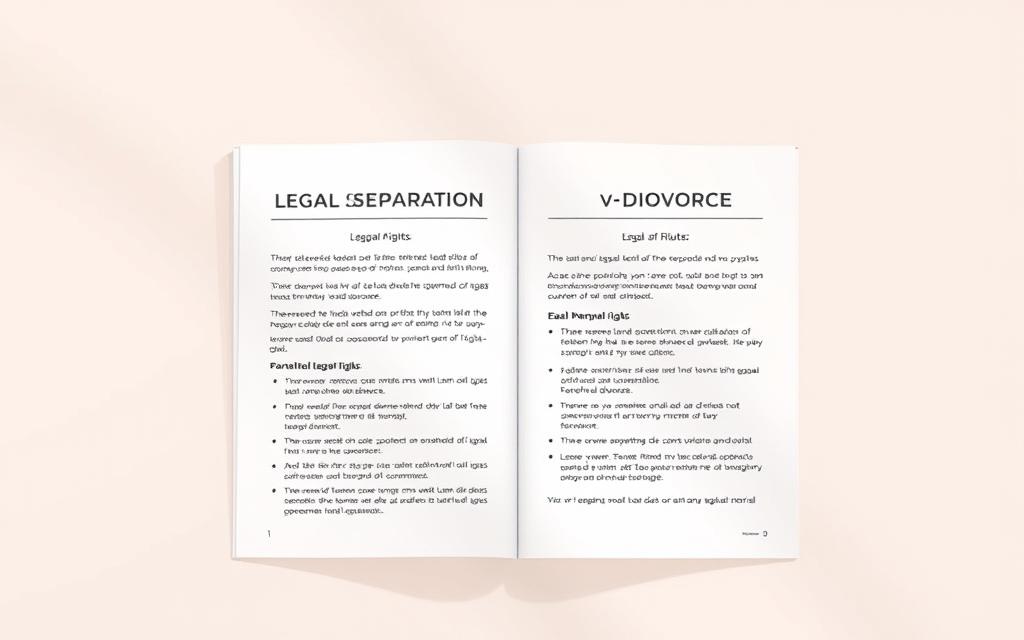
Legal separation and property division have special rules. These rules are different from getting a divorce. The choice between a separation agreement and a divorce decree affects your freedom and money.
Rights of the Separated Spouse
Spouses who are separated have important rights:
- They can keep health insurance
- They might get tax benefits
- They can get Social Security benefits
- They can keep joint bank accounts
Rights of the Divorced Spouse
Getting a divorce changes your rights a lot:
- You become completely independent
- You can get married again
- You divide property fully
- You might get spousal support
Knowing these differences helps you make smart choices about your marriage and future.
The Role of Mediation in Legal Separation and Divorce
Mediation is a big help for couples going through legal separation and divorce. About 50% of couples pick mediation. It’s a way to work together and save money compared to going to court.
Learning how to negotiate a legal separation through mediation can make things easier. It can also save money and reduce stress. Mediation usually solves problems in just 1-2 meetings, unlike court battles that can take months or years.
Benefits of Mediation in Legal Separation
Mediation is great for couples thinking about legal separation. Here’s why:
- It’s cheaper (30-50% less than a contested divorce)
- Disputes get solved faster
- It keeps things private
- Agreements can be more personal
Mediation in Divorce Proceedings
When you talk to a divorce attorney, they might suggest mediation first. About 80% of couples are happy with what mediation helps them agree on. It’s good at solving tough divorce problems.
Important things to think about in divorce mediation are:
- It can save on legal costs
- It helps people talk better
- It’s good for kids in the long run
- It lets couples control their agreements
Mediation isn’t for everyone. If there’s big trust issues or violence, other ways to solve problems might be needed.
State-Specific Laws and Regulations
Understanding state laws on legal separation can be tricky. Marriage separation laws change a lot from one place to another. It’s key for couples thinking about legal separation or divorce to know these rules.

California shows how different legal separation rules can be. The state has special rules that show how important local laws are:
- Residency rules are different for divorce and legal separation
- No waiting time is needed for legal separation
- Couples can stay legally separated forever
Variations in Legal Separation Laws
Every state has its own rules for legal separation. California’s rules show how complex these laws can be. For example:
- Divorce needs six months of living in the state
- Legal separation has easier rules for where you live
- Filing costs are between $435 and $500
Variations in Divorce Laws
State laws on legal separation can really change things. California is a no-fault state. This means couples can say “irreconcilable differences” to separate. This gives couples a way to change their marital status.
Couples should talk to local family law lawyers. They can explain the specific laws in their state. Each place has its own rules that can affect how things like money and kids are handled.
Pros and Cons of Legal Separation
Legal separation is a choice between divorce and staying together. It lets couples deal with problems in a special way. Knowing the good and bad points helps people decide what’s best for them.
Looking at legal separation and divorce needs careful thought. It lets couples set boundaries and stay married legally.
Benefits of Legal Separation
- Allows couples to live separately while remaining legally married
- Provides financial protection and clarity about property division
- Maintains certain marriage-related benefits like healthcare coverage
- Creates opportunity for relationship reconciliation
- Simplifies future divorce proceedings if reconciliation fails
Drawbacks of Legal Separation
Legal separation has good points, but there are challenges too. Couples need to think about these carefully.
- Prevents remarriage during separation period
- Can create ongoing financial entanglement
- Requires similar legal documentation as divorce
- May create emotional complexity for both partners
| Aspect | Legal Separation | Divorce |
|---|---|---|
| Marital Status | Legally Married | Legally Divorced |
| Remarriage Allowed | No | Yes |
| Property Division | Partial | Complete |
| Reconciliation | Easier | Requires Remarriage |
Legal separation has big benefits for couples who want to separate but not divorce. California law, for example, has rules that make legal separation a good choice for couples looking for a different way to live together.
Pros and Cons of Divorce
Understanding divorce is key. It has good and bad sides. Knowing these helps when deciding to get a divorce.
Divorce ends a marriage for good. It means you and your partner are completely separate. Knowing the difference between legal separation and divorce helps you choose.
Benefits of Divorce
- Provides complete legal and financial independence
- Allows individuals to remarry and start new relationships
- Resolves ongoing marital conflicts permanently
- Offers emotional closure and personal growth
Drawbacks of Divorce
- High emotional and psychological stress
- Significant financial costs (average $15,000 to $20,000)
- Potential negative impact on children
- Complex legal proceedings that can last months or years
About 50% of marriages in the United States end in divorce. This shows how tough relationships can be. Deciding to divorce is a big choice.
Divorce can be a fresh start. But, it comes with legal and emotional hurdles. Getting help from lawyers and counselors is important.
When to Choose Legal Separation
Relationship challenges can be tough. Legal separation is a good choice for couples who don’t want to get a divorce right away. It’s important to think about your personal, financial, and emotional needs before deciding.
Legal separation is great for many reasons. It lets couples stay married but live apart. This can help them figure out if they want to get back together or make other big decisions.
Signs Legal Separation Might Be Right
Knowing when to file for legal separation is key. Look for these signs:
- Uncertainty about permanent divorce
- Desire to preserve financial benefits
- Religious or personal beliefs preventing divorce
- Need for structured living arrangements
- Potential for future reconciliation
Situations Favoring Legal Separation
Many people choose legal separation for personal reasons. Financial considerations are big, like keeping health insurance or saving on taxes.
People over 50 might pick legal separation to keep their finances in order. It lets them work on their relationship without ending their marriage.
For legal separation to work, you need a good agreement. It should cover how to split property, handle child custody, and support each other financially. Getting help from a lawyer is very important.
When to Choose Divorce
Choosing to end a marriage is a big decision. Legal separation is a temporary fix. But, divorce is needed when fixing things seems impossible. Knowing when to choose divorce helps couples decide their future.
- Persistent patterns of emotional or physical abuse
- Complete breakdown of communication
- Irreconcilable differences that cannot be resolved
- Repeated infidelity
- Financial incompatibility
Signs Divorce Might Be Necessary
There are many reasons why ending a marriage is key. During a divorce attorney consultation, they look at several things:
| Situation | Divorce Indication |
|---|---|
| Ongoing Conflict | Constant arguments affecting mental health |
| Trust Betrayal | Irreparable damage to relationship foundation |
| Personal Growth | Significant divergence in life goals |
Situations Favoring Divorce
About 50% of marriages in California end in divorce. Key situations favoring divorce include:
- Sustained emotional disconnection
- Incompatible long-term life objectives
- Unresolvable financial disagreements
- Repeated breaches of trust
The decision to divorce should focus on personal well-being. It’s about safety and the chance for personal growth and happiness.
Conclusion: Making the Right Choice
Understanding legal separation vs divorce is hard. You must think about your personal life, money, and feelings. Each choice has its own good and bad sides for couples in trouble.
Legal separation and divorce each have their own ups and downs. Some couples like legal separation for a chance to get back together. Others choose divorce to end their problems for good. Your decision depends on money, kids, and how you feel.
Getting help from a lawyer is key. The Law Offices of Ian S. Mednick say to look at your situation carefully. Think about the future and the legal and money sides of each choice. Your goal is to protect yourself and make a good future for everyone.
The main thing is to make a choice that makes you happy and helps your future. Talking to family law experts can help you make a good choice. They can give you the help and advice you need during this tough time.